

HomeWaterIQ is reader-supported. When you buy through links on this page, we may earn a commission at no extra cost to you. As an Amazon Associate, we earn from qualifying purchases.
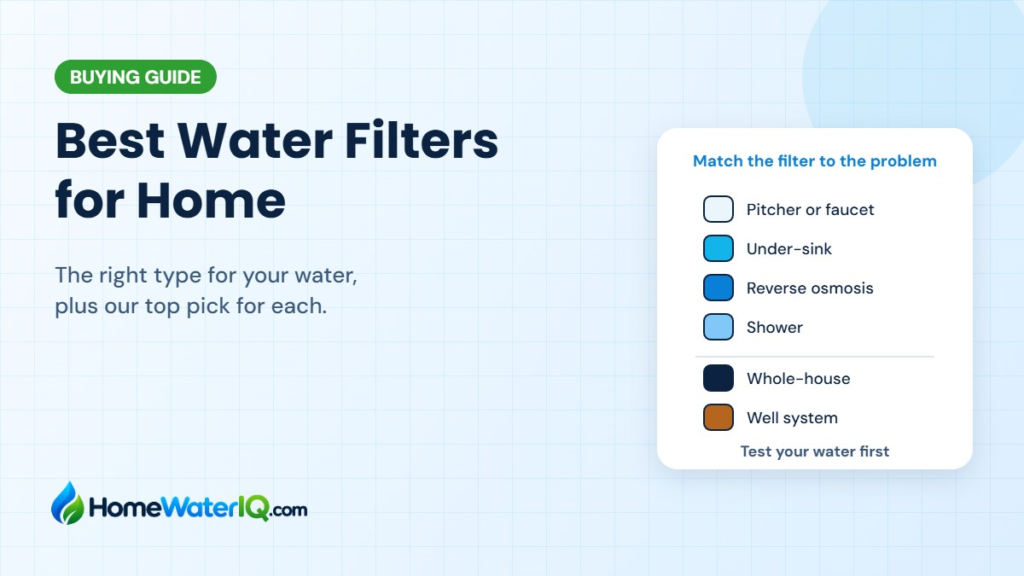
Short answer: the best water filter for most homes is an under-sink carbon filter, and our top pick is the Aquasana Claryum 3-Stage (about $175 on sale), which is certified to NSF/ANSI 42, 53 and 401 for chlorine, lead, PFOA/PFOS and more. If you need fluoride, nitrate or arsenic out too, step up to the Waterdrop G3P600 reverse osmosis system (about $440). Best by type: Brita pitcher with the Elite filter (about $35 to $42), PUR PLUS faucet-mount filter (about $27 to $37), AquaTru Classic countertop RO (about $475 list), Pentair Pelican PC600 whole-house filter (about $1,050), Sprite HO2 shower filter (about $28), SpringWell WS1 for well water with iron and sulfur (from about $2,100) and, if your real problem is hard water, the Whirlpool WHES48 softener (about $680 to $930).
We didn’t test these filters ourselves. We picked them by the numbers: third-party certifications, filter life, cost per gallon or per year, installation and price. Each pick below comes from one of our detailed buying guides, and the facts here match those guides. Prices are U.S. prices from manufacturer sites and major retailers as of late October 2026, and they change often.
Start with your water problem, then pick the type, then the product.
What’s your water problem?
| Problem | What fixes it | Start here |
|---|---|---|
| Chlorine taste or smell (city water) | Carbon filter certified to NSF/ANSI 42: pitcher, faucet-mount or under-sink; whole-house for every tap | Under-sink filters, whole-house filters |
| Chloramine (check your water report) | Catalytic carbon or a filter certified for chloramine; most shower filters don’t handle it | Under-sink filters |
| Lead (older pipes or lead service line) | Filter certified to NSF/ANSI 53 (or 58) for lead | Pitchers, under-sink filters |
| PFAS (“forever chemicals”) | Certified carbon block or reverse osmosis with a PFOA/PFOS claim under NSF/ANSI 53 or 58 | Under-sink filters, RO systems |
| Fluoride, nitrate, arsenic or high TDS | Reverse osmosis at the kitchen sink | RO systems |
| Hardness, scale, spots | Water softener (a filter won’t do it) | Water softeners |
| Well water with iron, manganese or rotten-egg smell | Oxidizing iron filter, sometimes plus a softener | Well water filters |
| Bacteria (coliform, E. coli) in a well | Fix the source and shock chlorinate, then UV certified to NSF/ANSI 55 Class A | Well water filters |
| Sand, silt, cloudy water | Sediment pre-filter (spin-down or cartridge) at the main line | Whole-house filters |
| Dry skin, chlorine smell in the shower | Shower filter certified to NSF/ANSI 177 | Shower filters |
| Renters (no drilling, no plumbing) | Pitcher, faucet-mount or countertop filter | Pitchers, countertop filters |
Best water filter by type at a glance
| Type | Top pick | Key certification | Upfront price | Yearly filter cost | Installation |
|---|---|---|---|---|---|
| Under-sink carbon (best overall) | Aquasana Claryum 3-Stage | NSF/ANSI 42, 53, 401 (WQA) | About $175 (sale) | About $168 | DIY; dedicated faucet included |
| Reverse osmosis | Waterdrop G3P600 | NSF/ANSI 58, 42, 372 | About $440 | About $145 | DIY; needs drain and outlet |
| Pitcher | Brita with Elite filter | NSF/ANSI 42, 53 (lead), 401 | About $35 to $42 | About $35 to $40 | None |
| Faucet-mount | PUR PLUS faucet filter | NSF/ANSI 42, 53, 401 (lead, microplastics, total PFAS) | About $27 to $37 | About $52 | Screws onto faucet |
| Countertop | AquaTru Classic | NSF/ANSI 42, 53, 58, 401 (IAPMO) | About $475 list | About $130 | Plug in |
| Whole-house (city water) | Pentair Pelican PC600 | NSF/ANSI 42 and 61 (IAPMO) | About $1,050 | Media every 5 years; sediment pre-filter every 6 to 9 months | Plumber recommended |
| Shower | Sprite HO2 | NSF/ANSI 177 | About $28 | About $22 | Screws onto shower arm |
| Well water (iron, sulfur) | SpringWell WS1 (sold direct) | None for the system | From about $2,100 | No cartridges (self-backwashing) | Plumber recommended |
| Well water (bacteria) | VIQUA PRO10 | NSF/ANSI 55 Class A | About $3,175 | UV lamp every 2 years | Plumber recommended |
| Softener (hardness) | Whirlpool WHES48 | NSF (hardness reduction and efficiency) | About $680 to $930 | Salt about $50 to $150 | DIY or plumber |
Under-sink carbon filters: best overall for most homes
An under-sink filter gives you filtered drinking and cooking water on tap and costs far less than a whole-house system. For most city-water homes, that’s the best balance of protection, convenience and price.
Our pick is the Aquasana Claryum 3-Stage. WQA certifies it to NSF/ANSI 42, 53 and 401, which covers chlorine and chloramine, lead, mercury, cysts, VOCs, PFOA and PFOS, and microplastics. Aquasana lists it at $174.99 on sale. Filters last 600 gallons or 6 months, so you’ll spend about $168 a year, and flow is a modest 0.5 gpm. It comes with its own faucet.
If you don’t want to drill a hole for a second faucet, the Claryum Direct Connect (about $125) carries the same three certifications through IAPMO and feeds your existing faucet at 1.5 gpm. On a tight budget, the Frizzlife SK99-NEW (about $100) is the cheapest pick its maker says is certified to NSF/ANSI 53. See all six picks in our guide to the best under-sink water filters and our Aquasana review.
Check Claryum 3-Stage price on Amazon
Reverse osmosis: best for fluoride, nitrate and the widest protection
Reverse osmosis (RO) pushes water through a very fine membrane after carbon prefilters. It removes things carbon can’t, such as fluoride, nitrate, arsenic and dissolved solids, and EPA lists it as effective for PFAS. The trade-offs are cost, some wastewater and more parts under the sink.
Our pick is the Waterdrop G3P600 (about $440). Waterdrop lists it as certified to NSF/ANSI 58, 42 and 372. It’s tankless, makes 600 gallons per day and sends one gallon down the drain for every two it filters, far better than the 5:1 or worse EPA says is typical of conventional RO. Filters come to about $145 a year, and its pump needs an outlet.
For less money, the iSpring RCC7AK (about $240) and APEC ROES-50 (about $200) are tank systems with NSF/ANSI 58 certification. Compare all seven in our guide to the best reverse osmosis systems, or read our Waterdrop review.
Water filter pitchers: cheapest way to start
A pitcher needs no installation and costs under $50, so it’s a good first filter for renters and anyone who mostly wants better taste. The downsides are small capacity and frequent filter changes.
Our pick is a Brita pitcher with the Elite filter (about $35 to $42 for a 10-cup pitcher). Make sure you get the Elite, not the Standard filter: the Elite is certified to NSF/ANSI 53 for lead by NSF and WQA, and WQA also lists it under NSF/ANSI 42 and 401. It lasts 120 gallons or about 6 months, which works out to about 17 cents a gallon or $35 to $40 a year.
The PUR Plus pitcher (about $27 to $37) filters faster and, as of September 2026, is certified by IAPMO R&T for lead, microplastics and total PFAS, but its filters last only 40 gallons. Clearly Filtered (about $90 to $110) cites lab tests for fluoride and more, but those claims are tested, not certified. Details are in our guide to the best water filter pitchers and our Clearly Filtered review.
Check Brita Elite pitcher price on Amazon
Faucet-mount filters: on-tap filtering with no plumbing
A faucet-mount filter screws onto your kitchen faucet in place of the aerator and has a lever to switch between filtered and unfiltered water. It’s faster than a pitcher, cheap and fully removable, so it’s a good fit for renters. It won’t fit most pull-down or sprayer faucets, and it makes the faucet bulkier.
Our pick is the PUR PLUS faucet filtration system (about $27 to $37 depending on style and finish). PUR says it is certified to reduce 70 contaminants, and on September 15, 2026, PUR announced that IAPMO R&T certified its PLUS faucet filter under NSF/ANSI 42, 53 and 401 to reduce lead, microplastics and total PFAS (a group of seven PFAS that includes PFOA and PFOS). Each cartridge lasts up to 100 gallons or 3 months. A three-pack of replacements was $39.36 at Walmart, so you’ll spend about $52 a year, or about 13 cents a gallon.
If lead is your concern, check the listing before you buy a cheaper faucet filter. Several we looked at had no certification we could match to a certifier’s listing, and a filter certified only to NSF/ANSI 42 covers taste and chlorine, not lead. We don’t have a separate faucet-mount guide yet; if you want more capacity, see the under-sink and countertop guides.
Check PUR PLUS faucet filter price on Amazon
Countertop and gravity filters: best for renters who want more
Countertop units hold more than a pitcher and need no plumbing. Some are plug-in RO machines; others are gravity dispensers. Our pick is the AquaTru Classic (about $475 list, often discounted). It’s a plug-in RO unit that IAPMO R&T lists under NSF/ANSI 42, 53, 58 and 401, including lead, PFOA and PFOS and microplastics. That’s the broadest certified claim list of any countertop unit we found. Filters cost about $130 a year at list prices. It’s a batch system, so you fill the tank at the sink and empty the wastewater by hand, and a family will refill it several times a day.
If you don’t need RO, the Aquasana Clean Water Machine (about $200 street, $399.99 list) is a certified gravity dispenser with the lowest cost per gallon in our countertop guide, about 10 to 12 cents. It’s sold direct by Aquasana and at retailers like Walmart. Read more in our guide to the best countertop water filters (including the facts on Berkey) and our AquaTru review.
Check AquaTru Classic price on Amazon
Whole-house filters: filtered water at every tap
A whole-house (point-of-entry) filter goes on the main water line and treats every tap and appliance. It’s the answer for chlorine smell or sediment throughout the house. Most whole-house carbon systems aren’t certified for lead or PFAS, so many homes pair one with an under-sink or RO filter.
Our pick for city water is the Pentair Pelican PC600 (about $1,050). Pentair says IAPMO R&T certifies it to NSF/ANSI 42 for 97% chlorine reduction and NSF/ANSI 61 for material safety, which most big carbon tanks can’t claim. It’s rated for 10 gpm and homes with 1 to 3 bathrooms. Replace the carbon media every 5 years or about 650,000 gallons, and the sediment pre-filter every 6 to 9 months. It’s a chlorine filter, so if your city uses chloramine, look at a catalytic carbon system instead.
For PFAS at every tap, the Aquasana HealthShield is the rare whole-house system certified to NSF/ANSI 53 and 401, but it costs about $2,900 on sale. On a budget, the iSpring WGB32B (about $518) is a three-stage cartridge system. See all eight in our guide to the best whole-house water filters, and if you’re torn between two direct-sold brands, read SpringWell vs. Aquasana.
Check Pelican PC600 price on Amazon
Shower filters: chlorine only, and only so much
Set expectations first. The only U.S. shower filter standard, NSF/ANSI 177, covers free chlorine and nothing else. No shower filter softens water, and most don’t handle chloramine. Within those limits, our pick is the Sprite HO2 (about $28 at Home Depot). It’s certified to NSF/ANSI 177, screws in between your shower arm and existing showerhead, and its cartridge lasts up to 12 months for about $22. If you want a filter and showerhead in one, the Culligan WSH-C125 (about $50) is IAPMO-certified to the same standard. Chloramine households can try a vitamin C filter. Our guide to the best shower filters has the details.
Check Sprite HO2 price on Amazon
Well water systems: test first, then treat
No agency tests a private well for you. The CDC and EPA recommend testing at least once a year for coliform bacteria, nitrates, pH and TDS; to choose equipment, also test for iron, manganese, hardness, arsenic and hydrogen sulfide. The right system depends on that test.
For iron, manganese and rotten-egg sulfur smell, our pick is the SpringWell WS1 (from about $2,100, sold direct). It uses air-injection oxidation, is rated for up to 7 ppm iron, 8 ppm hydrogen sulfide and 1 ppm manganese, and backwashes itself, so there are no cartridges to buy. It has no third-party performance certification, and each backwash sends roughly 70 gallons to the drain, so check your well’s recovery rate and septic capacity.
Sold direct from SpringWell; not sold on Amazon.
For bacteria, fix the source and shock chlorinate first, then add UV certified to NSF/ANSI 55 Class A. The VIQUA PRO10 (about $3,175) is certified to Class A at 10 gpm; its lamp lasts two years. For iron plus hard water, the AFWFilters Iron Pro 2 (about $800) handles both in one tank. Arsenic and nitrate are best treated with RO at the kitchen sink. Match your test to a system in our guide to the best water filter for well water.
Check VIQUA PRO10 price on Amazon
Water softeners: when the problem is hardness
White scale, spotty dishes and poor soap lather mean hard water, and a filter won’t fix it. Removing calcium and magnesium takes a water softener. Our explainer on water softener vs. water filter covers the difference, and many hard-water homes end up with both.
Our top softener is the Whirlpool WHES48 (about $680 to $930). It’s a 48,000-grain unit that retail listings say is certified by NSF for hardness reduction and efficiency, it handles up to 160 grains per gallon of hardness and 12 ppm of clear-water iron, and it regenerates based on water use. Salt typically runs about $50 to $150 a year; plug your own numbers into our water softener cost calculator.
Sold at home centers and farm stores such as Lowe’s, Farm & Fleet and RC Willey; not currently sold on Amazon.
Size it with our water softener size calculator and compare more picks in our guides to the best water softeners, the best water softener for well water and salt-free systems, which reduce scale but don’t remove hardness. Our water softener cost guide covers installation and dealer pricing.
How to choose a water filter
Test first and read your water report
If you’re on city water, your utility must publish an annual Consumer Confidence Report (CCR) listing what was detected. Look for disinfectant type (chlorine or chloramine), lead results, PFAS and hardness. Lead often comes from your own pipes rather than the utility, so a home test is worth it in older houses. Well owners should use a state-certified lab. For hardness, our guide on how to test water hardness walks you through strips, drop kits and lab tests, and our water hardness converter turns mg/L or ppm into grains per gallon.
Certified beats “tested to”
A filter is certified when a body like NSF, WQA, IAPMO R&T or CSA tests it to an NSF/ANSI standard, lists it publicly and audits the factory. “Tested to NSF/ANSI 53” or “meets NSF standards” only means a lab ran a test the maker paid for. Also check which contaminants are covered, not just the standard number: NSF/ANSI 42 is taste and chlorine, 53 is health claims like lead and PFOA/PFOS, 58 is reverse osmosis, 401 is emerging contaminants, 177 is shower filters, and 372 is lead-free materials only. EPA suggests looking for NSF/ANSI 53 or 58 certification for PFAS reduction.
Compare cost per gallon, not sticker price
Divide the replacement filter price by its rated gallons. A Brita Elite filter works out to about 17 cents a gallon, a PUR PLUS faucet cartridge to about 13 cents and the Claryum 3-Stage to about 14 cents. Over a few years, filters often cost more than the system, so check replacement prices first.
Installation and renting
Pitchers, faucet-mount and countertop units need no tools. Under-sink filters and RO systems are a DIY afternoon for most homeowners, though RO needs a drain connection and often a faucet hole. Whole-house filters, softeners and well systems go on the main line, so most people hire a plumber. Renters should stick to units they can take with them.
FAQ
What is the best type of water filter for home use?
For most city-water homes, an under-sink carbon filter certified to NSF/ANSI 42 and 53 is the best mix of protection, convenience and cost; our pick is the Aquasana Claryum 3-Stage. Choose reverse osmosis if you need fluoride, nitrate or arsenic removed, a whole-house filter if you want chlorine out of every tap, and a softener if the problem is hardness.
Do I need a whole-house filter or just a drinking water filter?
Most homes only need a drinking water filter, because lead and PFAS matter most in water you drink and cook with. A whole-house filter makes sense for chlorine smell, sediment or well problems, and most whole-house carbon systems aren’t certified for lead or PFAS anyway.
Which water filters remove lead?
Look for certification to NSF/ANSI 53 (or 58 for RO) that specifically lists lead. Among our picks, the Brita Elite pitcher filter, PUR PLUS pitcher and faucet filters, Aquasana Claryum 3-Stage and AquaTru Classic are certified for lead. Brita’s Standard pitcher filter and most shower filters are not.
Which water filters remove PFAS?
Reverse osmosis and certified carbon block filters are the most reliable home options. Look for a PFOA/PFOS or total PFAS claim under NSF/ANSI 53 or 58, like the Claryum 3-Stage, AquaTru Classic or PUR PLUS filters. EPA notes that, as of April 2024, those certifications didn’t yet confirm removal down to its new drinking water levels.
Will a water filter fix hard water?
No. Carbon filters, pitchers and shower filters don’t remove calcium and magnesium. Reverse osmosis removes hardness from drinking water at one tap, but scale throughout the house takes a water softener, or a salt-free conditioner if you only want to reduce scale.
How often should I change my water filter?
Follow the maker’s gallon or time limit, whichever comes first. That’s about 2 to 6 months for pitcher and faucet filters, 6 months for many under-sink filters, 6 to 24 months for RO stages and several years for whole-house carbon media.
Sources: EPA, Consumer Confidence Reports; EPA, PFAS water filter fact sheet; EPA WaterSense, point-of-use RO systems; EPA, chloramines in drinking water; CDC, guidelines for testing well water; EPA, protect your home’s water; NSF, PFAS and filtration standards; NSF, NSF/ANSI 177 shower filter certification; Aquasana, Claryum 3-Stage; TapWaterData, AQ-5300 certification check; Waterdrop, G3P600 RO filter; TapWaterData, Brita Elite certifications; Brita, Elite filter; PUR, PLUS faucet filtration system; PUR press release, September 15, 2026; BriefGlance, PUR PLUS IAPMO certification; Walmart, PUR PLUS RF99993 3-pack; TapWaterData, faucet-mount filters; TapWaterData, AquaTru Classic; TapWaterData, Aquasana Clean Water Machine; Pentair, PC600 whole house filter; Home Depot, Sprite HO2-CM; SpringWell, well water systems; Water Filter Guru, SpringWell WS review; FreshWater Systems, VIQUA PRO10; Lowe’s, Whirlpool WHES48; HomeGuide, water softener cost.
Keep reading
 Clearly Filtered Review (2026): Pitcher, Bottle and Under-Sink
Clearly Filtered claims to reduce 386+ contaminants, including fluoride, but only chlorine, taste and odor are certified. Here's what you…
 AquaTru Review (2026): Countertop RO by the Numbers
AquaTru makes some of the best-certified countertop reverse osmosis purifiers you can buy. Here's what each model costs to run,…
 Waterdrop Review 2026: Which Waterdrop Filter Is Worth Buying?
Waterdrop sells some of the most popular tankless RO systems on Amazon, but its certifications vary a lot from model…